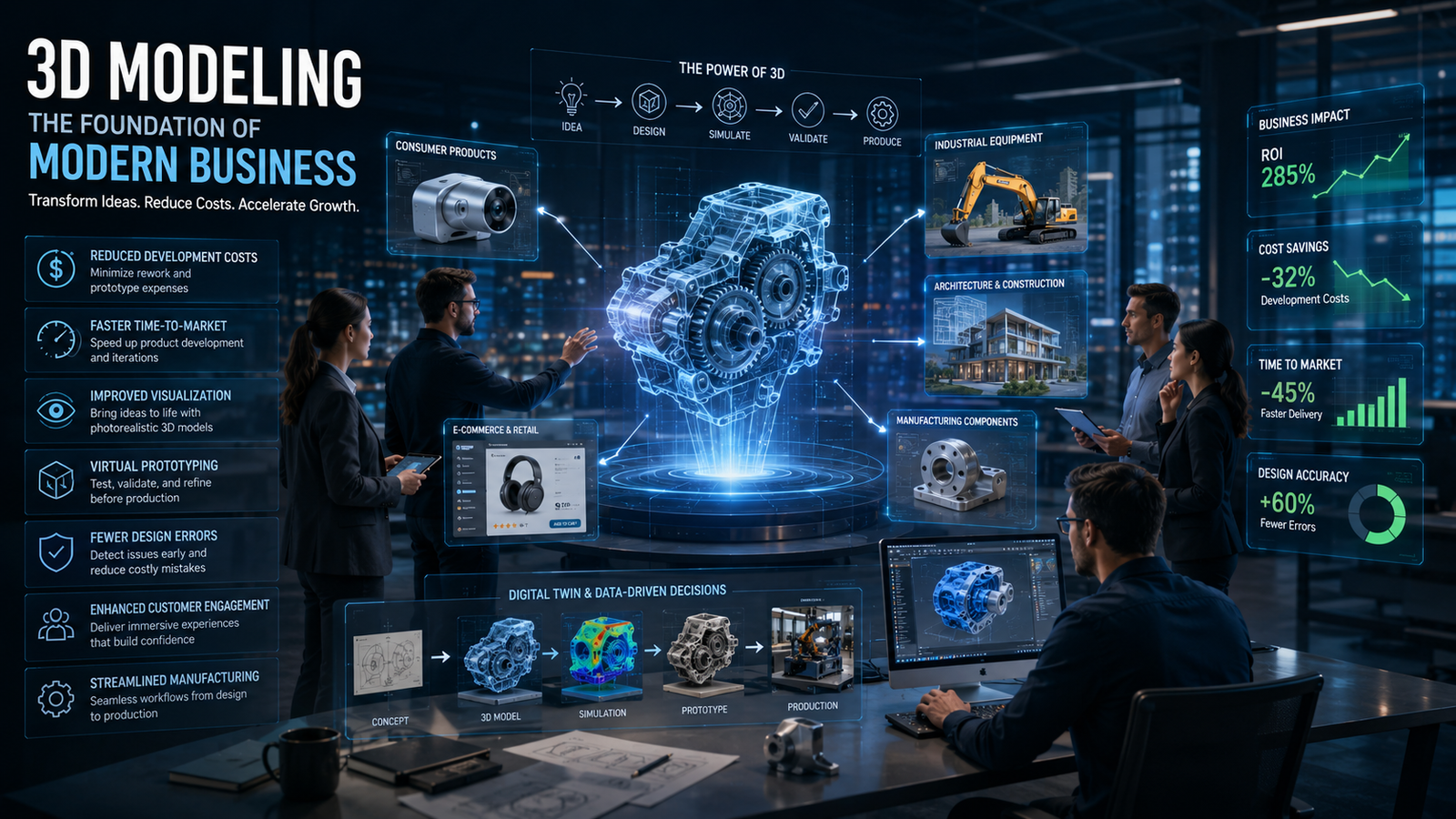
In today’s digital world, businesses are constantly searching for ways to visualize ideas before investing real money into production. This is where 3D modeling plays a powerful role. From architecture and real estate to product design and marketing, 3D models allow companies to see, modify, and test ideas in a virtual environment before building them in the real world.
What Most People Don’t Know About 3D Modeling
To a normal viewer, a 3D model may look like just a digital image or animation. However, behind the scenes there are several technical processes involved:
- Polygon Mesh Structure
Every 3D model is built using thousands of tiny shapes called polygons. These polygons create the structure of the object. The more optimized the mesh is, the smoother and faster the model performs in software and real-time applications.
- Texturing and Materials
The realistic look of a 3D object comes from textures and materials. These include color maps, reflection maps, and normal maps that simulate surface details like metal, wood, glass, or fabric.
- Lighting Simulation
Professional 3D scenes simulate real-world lighting conditions. Advanced rendering engines calculate how light bounces off surfaces, creating realistic shadows, reflections, and depth.
- Rendering Technology
Rendering is the process that converts the 3D scene into a final image or animation. High-quality rendering can create visuals so realistic that it becomes difficult to distinguish them from real photographs.
Why Businesses Use 3D Modeling
Businesses across industries use 3D modeling because it provides a clear visual understanding of a product, space, or concept before physical development begins.
- Cost Reduction
Creating a digital prototype is far cheaper than building multiple physical prototypes. Businesses can modify designs instantly without material costs.
- Faster Decision Making
3D models help stakeholders understand ideas quickly. Investors, clients, and teams can visualize projects clearly, which speeds up approvals and planning.
- Better Marketing and Presentation
High-quality 3D visuals can be used in advertisements, product launches, websites, and social media campaigns, making marketing more engaging and professional.
- Risk Reduction
Errors in design can be identified early through simulation and visualization, saving time and preventing expensive mistakes during production.
The Future of 3D Modeling in Business
With technologies like AR, VR, and real-time rendering, 3D modeling is becoming even more powerful. Businesses can now create immersive experiences where customers can interact with products or explore buildings virtually before they exist in reality.
Conclusion
3D modeling is no longer just a tool for designers—it has become a strategic business asset. By allowing companies to visualize, test, and present ideas digitally, it saves money, improves communication, and accelerates innovation. As technology continues to evolve, 3D modeling will play an even bigger role in shaping how businesses design, market, and deliver products.

No replies yet
Start the discussion
Be the first to ask a follow-up question or add practical insight about this topic.